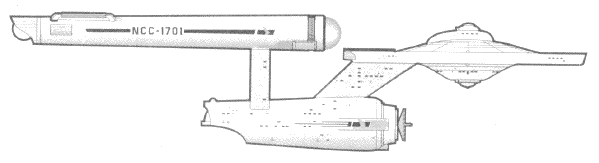
Down
Enterprise. エンタープライズ.
このページをアメリカ海軍のオーソリティーVANDY-1様の
祝一周年
英語.[名詞]
冒険.進取の精神.
参考
FAQ A History of Ships Named Enterprise .
Enterprizeとも綴られる.
Up Down
フランス帆走フリゲートL'Enterpriseを
1705.5イギリス艦Trytonが拿捕し六等帆走フリゲート、エンタープライズ①と改名しJ.Paul艦長の指揮下に地中海 で使用
07.5/19艦長W.Davenport10/12Thornton沖で座礁事故により沈没.
320t 33.5x8.5x4.6m 砲24門 乗員115.
Up Down
イギリス② 四等帆走フリゲート
ロック・プリマスで1709.4/4起工/28進水後Nicholas
Smith艦長の指揮下にヴァージニア 沿岸で哨戒任務に従事
11.6Hovenden Walker少将の指揮下にセント・ローレンス へ遠征
12本国水域に戻り哨戒任務に従事
18-9改修
19スペイン 軍がスコットランド 沿岸に建設したDonan城を破壊.10James
Mighels中将の指揮下にヴィゴー占領に参加
21-4ヴァージニア 沿岸で哨戒任務に従事
40.2/20ハルクとなり病院船リヴァプール と改名49売却.
531t 35.97x9.75m Gx40 乗員190.
Up Down
アメリカ 独立戦争中のシャンプレイン湖の戦い で1775.5/18アメリカ陸軍のベネディクト・アーノルド大佐が捕獲したイギリス補給スループを
エンタープライズ①と改名
76退役
77.7/7座礁後廃棄され焼却処分.
70t.
Up Down
アメリカ民間スクーナーを
1776.12/20海軍が購入しエンタープライズ②と改名されチェサピーク湾 で使用
77.2売却.
25t.
Up Down
アメリカ③ 帆走スクーナー(ブリッグ)
ヘンリー・スペンサー/ボルティモア 造船所で1799建造
1803ディケーター 艦長の指揮下にトリポリ 作戦に参加12/23爆弾ケッチ、マスティコを捕獲(イントレピッド と改名)
05艦長ポーター
12対英戦争に参加
13.9イギリス帆走砲艦ボクサー を拿捕
23カリブ海進出7/9西インド諸島リトル・キュラソー で座礁沈没.
USS
Enterprise caputured
Tolipolitan sloop of war Tolipoli (National Archives image).
ラッキー・リトル・エンタープライズの名で知られる.
135t.
Up Down
アメリカ④ スクーナー
ニュー・ヨーク /ブルックリン 工廠で1831.10/26進水12/15竣工し南アメリカ 沿岸で哨戒任務に従事
39.7/12-11/29予備役編入
44.6/24予備役編入10/28売却.
194t.
Up Down
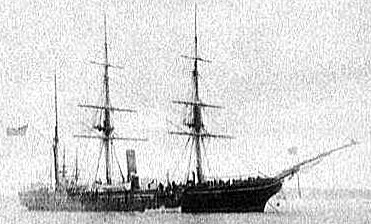
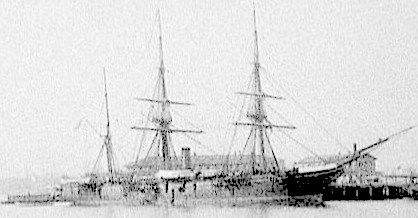
デトフォード 工廠で1862.5/5起工されたイギリス、サーカシアン級中央砲郭スループ (1/1)サーカシアン を
62エンタープライズ級中央砲郭スループ (1/1)エンタープライズ⑯と改名
64.2/9進水6/3竣工
71予備艦
86売却解体.
Up --------------------------------- Down
イギリス エンタープライズ級中央砲郭スループ
同型艦(1/1864)
エンタープライズ (exサーカシアン ).
Up Down
アメリカ エンタープライズ級木造スクリュー・スループ
1375t
56.39x10.67x4.34m
R 11knt
279mmx1 229mmx4 60pdrx1
乗員184
同型艦(5)
エンタープライズ .1874起工6/13進水77竣工1909売却.
アダムス .1874起工76進水7/21竣工1920売却.
エセックス .1874起工76頃、進水76竣工1930売却.
Up --------------------------------- Down
アメリカ⑤
エンタープライズ級木造スクリュー・スルーフ ゚(1/5)
ポーツマス 工廠で1874起工6/13進水77.3/16竣工
90予備役編入
91アナポリス 海軍兵学校練習艦
92マサチューセッツ州に移管され練習艦として使用
1909海軍に返還10/1売却.
Up Down
イギリス⑰ エメラルド級軽巡洋艦 (2/2+1)I52
RN Emerald class
light cruiser HMS Enterprise ,
March 1938.
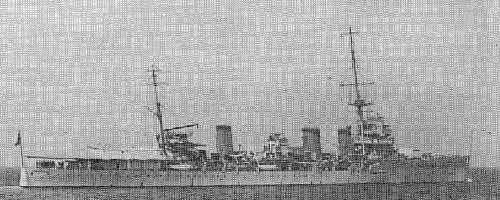
戦時緊急計画軽巡洋艦としてジョン・ブラウン/クライドバンク 造船所に1918.3/7発注6/28起工19.12/23進水後WW1の終了により建造遅延26.1デヴォンポート 工廠で竣工
29姉妹艦エメラルド とともにTTをIVx4に換装
36射出器を設置
39.8/23艦長エガートン 大佐9/3WW2勃発時、本国艦隊第12巡洋艦戦隊所属
40ポンポン砲IVx1を増備1/30ハリファクス 出港後戦艦(02)ヴァリアント 等と軍隊輸送船団TC3を護送2/2北大西洋(49゚N/48゚W)で船団から分離3/2艦長John
Campbell Annesley大佐4/19雷撃を行ったU65を砲撃/27戦艦(03)ウォースパイト 等とナルヴィク 、アケネスを砲撃6/1H部隊に編入
RN Emerald class light cruiser HMS Enterprise .
41東洋艦隊に編入
41-2TTIVx2を20mmMGx16or18に換装
42.4/6日本機の攻撃を受けて沈没した重巡洋艦ドーセットシャー の生存者を救助7/15艦長オドンネル 大佐11/17-9艦長John
Noel Sparks中佐/19オドンネル 大佐
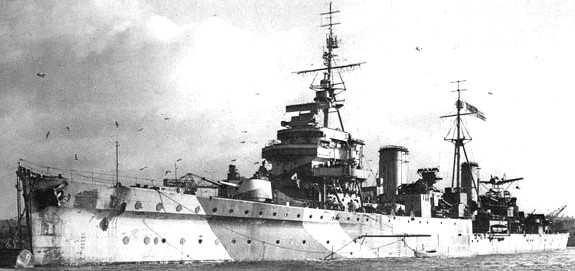
43本国艦隊に編入.7艦長グラント 大佐.10修理完了し本国艦隊に編入12/28軽巡洋艦グラスゴー とともにビスケー湾 で封鎖突破船Alsteruferの支援に出港したドイツ駆逐艦Z27、水雷艇T22、25、26と交戦しT22以外を撃沈
44.6/6ノルマンディー上陸作戦 時にA部隊所属としてユタ海岸の上陸を支援しPouppevilleに対して152mm砲を145斉射(単発6)/28艦長Allan
Thomas George Cumberland Peachey大佐.6-7シェルブール 沿岸を砲撃10/2艦長Sydney
Keith Smyth(退役)大佐/24艦長William Desmond Revell Bravington(退役)中佐
45.1/5解役後輸送任務に復役4/10艦長代行Stephen
Barry(退役)大佐>George Alan Kenneth McCombe中佐
46.1/13本国帰投4/11売却/21ニューポート 回航.8売却解体.
RN Emerald class light cruiser HMS Enterprise ,
1943.
Up Down
1916.12アメリカ海軍が購入したヨットを
小型哨戒艇(/、790)エンタープライズ⑥と改名
WW1中、第2海軍区で哨戒に使用.
22m 16t.
Up Down
アメリカ⑦ ヨークタウン級空母 (2/2+1)CV6
USS Yorktown class aircraft carrier . Illustrated by Kiyochan .
1933計画空母としてニューポート・ニューズ 造船所に8/3発注34.7/16起工36.10/3スワンソン 海軍長官夫人の命名により進水38.5/12ホワイトN.H.White大佐の指揮下に竣工しリオ・デ・ジャネイロ に慣熟航海を実施後アメリカ東海岸、カリブ海で訓練
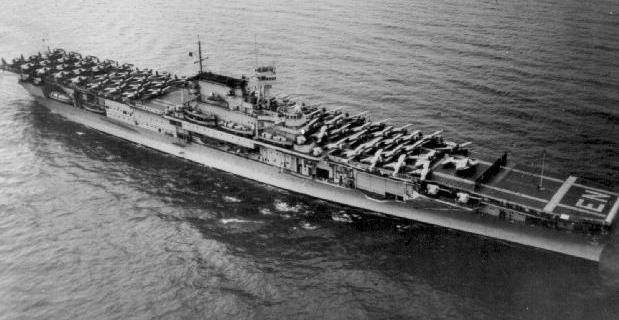
US Yorktown class aircraft carrier (CV6) Enterprise
as completed, 1938.
39.5太平洋艦隊に編入されサン・ディエゴ に配備後真珠湾 に配備
41.11/28重巡洋艦(CA25)ソート・レーク・シティ 、(26)ノーザンプトン 、(27)チェスター 、第6駆逐連隊(DR6)駆逐艦(DD363)バルチ 、第11駆逐隊駆逐艦(380)グリッドレイ 、(382)クレイヴン 、(400)マッコール 、(401)モーリー 、第12駆逐隊駆逐艦(384)ダンラップ 、(385)ファニング 、(397)ベンハム 、(398)エレット と第8任務部隊(ハルゼー 中将)を編成して真珠湾 出港12/2-4ウェーク に海兵隊第211戦闘飛行隊(VMF211)のF4F3戦闘機12機を輸送して真珠湾 に帰投中/7オアフ島 沖200nmに達した際に日本艦隊が真珠湾 を奇襲しメンゲス 少尉が死亡、ハワイ に帰投中の搭載機が味方の誤射を受けてウィリス 少尉が死亡/8以降、空母(CV2)レキシントン 等とハワイ 近海で捜索任務に従事中/10ハワイ 近海(23゚45'N/155゚35'W)で搭載機が伊70 を撃沈(配備位置から考えると、これは攻撃を回避した伊25 の可能性が高い)/10-4真珠湾 寄港後ソート・レーク・シティ 、ノーザンプトン 、第11駆逐隊マッコール 、モーリー 、クレイヴン 、第12駆逐隊ファニング 、エレット と第8任務部隊を編制しウェーク 救援に向かう途中、オアフ島 北方で給油作業中にノーザンプトン とクレイヴン が衝突事故により損傷/19真珠湾 出港後ジョンストン島西方で第11、第17任務部隊を支援/20(20゚10'N/165゚28'W)と(20゚15'N/165゚40'W)で搭載機がアメリカ潜水艦(SS181)ポンパノ を2度にわたり誤認攻撃
12/14等と
エンタープライズ 、ソート・レーク・シティ 、ノーザンプトン 、第11駆逐隊マッコール 、モーリー 、クレイヴン 、第12駆逐隊ファニング 、エレット と第8任務部隊を編制して真珠湾 寄港
42.1/10真珠湾 寄港後サモア に船団を護送2/1第8任務部隊を編制しマーシャル諸島 クェゼリン 、ウォッゼ、マレーラップ島を空襲(サイド 予備少尉が戦死)し船舶3隻を撃沈、8隻を撃破し航空機多数を破壊後千歳航空隊機が突入し損傷/5真珠湾 入港後修理に従事4/8真珠湾 出港後ドゥーリトル の率いる陸軍航空隊所属のB25爆撃機を搭載して東京 を空襲する空母(CV8)ホーネット を護衛/18東京初空襲 を支援/25-30真珠湾 寄港後珊瑚海 に急航5/26真珠湾 帰投/28第16任務部隊司令官スプルーアンス 少将の旗艦を継承6/5ミッドウェー海戦 で空母赤城 、加賀 、飛龍 を撃沈、駆逐艦朝潮 、谷風 を撃破/13-7/15真珠湾 に寄港し修理後第61任務部隊に編入8/8ソロモン諸島揚陸作戦を支援後ソロモン諸島近海で各種任務に従事/24第2次ソロモン海戦に参加し空母(CV3)サラトガ 搭載機とともに空母龍驤 を撃破(後に撃沈処分)したが爆弾3発が直撃、4発が至近距離で爆発し乗員74名が死亡後24kntで航空機を収容して退避/25ガダルカナル島 北方(07゚47'N/160゚13'E)で貨物船金龍丸 (9309T)を撃沈9/10真珠湾 で修理に着手10/16修理完了しホーネット と第61任務部隊を編成/26-7南太平洋海戦Battle
of the Santa Cruz Islandで空母翔鶴 を撃破したが、隼鷹 搭載機の爆弾3発が命中、スウィアラー 大尉、ワイフェルス 工作兵等乗員44名が死亡、75名が負傷/30ヌーメア に入港し緊急修理11/11工作艦(AR4)ヴェスタル 乗員を乗せたまま緊急出港/13戦艦比叡 を雷撃/14ガダルカナル島 沖で同島を砲撃して退避中の重巡洋艦衣笠 を海兵隊機とともに撃沈/16-12/4ヌーメア に寄港し修理に従事後ニュー・ヘブリディーズ諸島エスピリッツ・サント近海で行動
43.1/28ソロモン諸島近海に移動/29-30レンネル島沖海戦2/1エスピリッツ・サント入港4/16艦長ギンダー 大佐5/27真珠湾 でニミッツ 司令長官から大統領感謝状を授与7/20ピュージェット・サウンド /ブレマートン 工廠で修理と改装工事に着手11/19-21マキン上陸を支援/26搭載機が夜間戦闘を実施12/4第50任務部隊に所属してクェゼリン を攻撃/10真珠湾
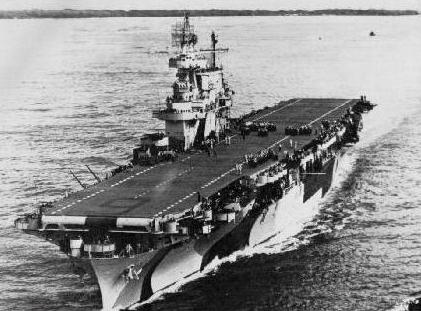
US Yorktown class aircraft carrier (CV6) Enterprise
after a major overhaul and refit in 1943.
44.1/29-2/3第58任務部隊に所属してクェゼリン 上陸を支援中/31空母(CV10)ヨークタウン 、(17)バンカー・ヒル、軽空母(CVL24)ベロー・ウッドと第58.2任務群を編制してマーシャル諸島を空襲しクェゼリン で駆潜特務艇第18 、21号 を、ミリで駆潜特務艇第14 、19 、28号 を撃沈しエニウェトック 沖で特設捕獲網艇桂丸 (540T)を撃破(/31駆逐艦[DD573]ハリソン が撃沈)2/7トラック を空襲/20ヤルート環礁上陸を支援/30クェゼリンを空襲し特設運送船秋葉山丸 (4603T)を撃沈3/15エスピリッツ・サント出港後第36.1任務群に所属して/19-25エミラウ島上陸を支援/26第58任務部隊に復帰しヤップ、ウルシー、ウォレアイ、パラウ諸島を12日間にわたって実施4/14マジュロ出港後ホーランディア上陸を支援/29-30トラック を空襲10/24レイテ沖海戦 で空母(CV11)イントレピッド、(13)フランクリン 、軽空母(CVL29)キャボットとともに戦艦武蔵 を撃沈
45硫黄島上陸作戦を支援3/18九州近海で日本機の急降下爆撃を受けて損傷4/11沖縄 沖で特攻機の突入により損傷し後方に退去/12九州近海に再進出5/13飛行甲板に特攻機が突入し14名が死亡34名が負傷し前部昇降機が大破
WW2後復員輸送に従事し11000名を輸送
47.2/17予備役編入
56除籍
ex-US
Yorktown class aircraft carrier (CV6)
Enterprise awaiting the breakers, late 1958.
58.7/1売却解体され3脚檣をアナポリス 海軍兵学校で保存.
愛称ビッグE.
Up Down
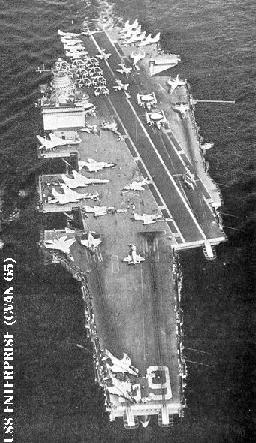
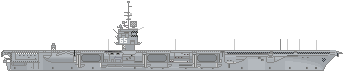
アメリカ エンタープライズ級原子力攻撃型空母
75700s86500(#73)or89600ft
341.3(335.9)pp317.00(飛行甲板337.41)x38.5(最大78.3飛行甲板最大76.8)x10.8(格納庫223.1x29.3x7.62)m
NTx4原子炉(ウェスティング・ハウスA2W)x8 280000shp
36knt 400000nm/20knt
テリアSAMII(予定のみ、シー・スパロー短SAMVIIII発射機を同位置に後日装備)
航空機x80-95 昇降機x4 C13型射出機(76.2m)x4
航空弾薬2000t 航空燃料1135kl
乗員4900
同型艦(1+5/1961)
CVAN65 エンタープライズ .(66
--).(67 --).(68 --).(69 --).(70 --).
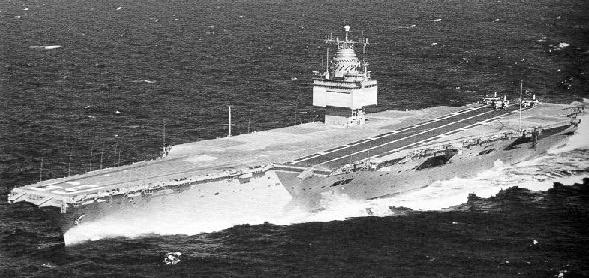
USS
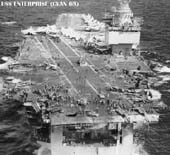
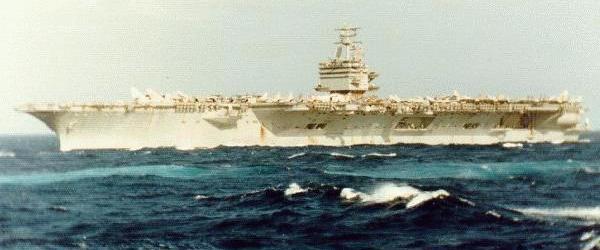
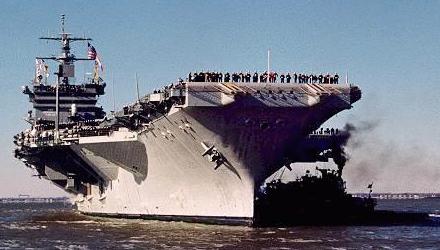
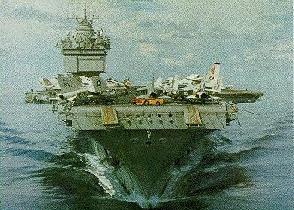
Enterprise class aircraft carrier (CVAN65) Enterprise as completed
in 1961 .
世界初の原子力空母.
搭載機以外に武装を持たずに竣工した最初の空母.
Up --------------------------------- Down
アメリカ⑧ エンタープライズ級空母 (1/1+5)CVAN65
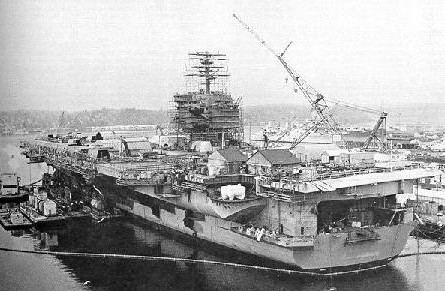
1950設計開始53-4計画中断58計画原子力攻撃型空母としてニューポート・ニューズ 造船所に57.8/16発注58.2/4第546番船としてウィリアム・B・フランキ海軍長官の命名により起工60.9/24フランキ長官夫人の手により進水10/29公試開始40knt以上を公試で発揮.12原子炉臨界61.11/25デポアVincent
Paul DePoix大佐の指揮下に竣工(建造費45130万$は空母[CV63]キティ・ホークの1.7倍)し大西洋艦隊に編入12/29ノーフォーク に配備
62.1/12初出港/17第1空母航空団司令ジョージ・E・タリー中佐の操縦するF8U-1クルセーダーが最初の着艦に成功後カタパルトで発進2/5A3J-1ヴィジランティ攻撃機を装備するVAH7を初めて搭載してノーフォーク 出港後カリブ海に派遣/20マーキュリー宇宙計画によるフレンドシップ7(ジョン・H・グレン海兵中佐)のカプセル追跡判定艦として使用6/22同艦用の第6空母航空団を新編/25大西洋艦隊に編入7/4ボストン 訪問後第24任務部隊に所属して艦隊演習に参加し第6艦隊に編入8/3ノーフォーク 出港後最初の地中海巡航を実施(F4H-1ファントム戦闘機、A3J-1の初展開)し空母(CVA38)シャングリ・ラ と交代後NATO演習に参加(イギリス空母搭載機が着艦)ニース、ナポリ を訪問10/11着艦8000回を記録してノーフォーク に帰投/25キューバ封鎖宣言により海兵隊のVMA225(A-4C装備)を搭載してカリブ海に出動し第135任務部隊(第2空母戦隊司令官ジョン・T・ヘイワード少将)旗艦として空母(CVA62)インディペンディンス 等とともに封鎖任務に従事12/8-
63.2/8ノーフォーク 寄港/16第6艦隊に編入され大西洋、地中海を巡航7/20カンヌで艦長ミカエリスFrederick
Hayes ("Mike") Michaelis大佐着任9/8航程5000nm、着艦回数12000を記録してノーフォーク に帰投
64.2/8ノーフォーク 出港後インディペンディンス と交代して第6艦隊に編入5/13世界初の原子力艦のみによる部隊として原子力ミサイル巡洋艦(CGN9)ロング・ビーチ 、原子力ミサイル・フリゲート(DLGN35)ベインブリッジ と第1原子力任務部隊(バーナード・M・ストリーン少将)を編成7/23ナポリ で空母(CVA59)フォレスタル と交代/31ジブラルタル海峡 を通過して大西洋入りし第1原子力任務部隊による東回り無補給世界一周航海(シー・オービット作戦)開始8/20喜望峰経由でカラチに初寄港/28イギリス空母ヴィクトリアス と共同訓練を実施/31フリーマントル 9/3メルボルン /4シドニー 寄港/23リオ・デ・ジャネイロ (サン・パウロ に2日間寄港)にホーン岬経由で寄港10/1チャールストン 寄港/3ノーフォーク 帰投(65日間、平均速力約20knt、30126nm走破)11/2ニューポート・ニューズ 造船所で最初の炉心交換(航行距離20.7万nm、着艦42000回)とRA-5C偵察機導入に伴う統合作戦情報センター設置を中心とする近代化改装を実施
65.6/1太平洋艦隊にロング・ビーチ 、ベインブリッジ とともに10/1付で編入されアラメダ に配備することを公表/22公試開始7/17艦長ハロウェイJames
Lemuel Holloway III大佐10/26第3空母戦隊(ヘンリー・L・ミラー少将)旗艦として第9攻撃空母航空団を搭載してノーフォーク出港後喜望峰、マラッカ海峡 経由で11/21or26(#99)ベインブリッジとともに第7艦隊に編入/27スービック湾 入港後インディペンディンスと交代12/2ディキシー・ステーションから第94攻撃飛行隊長O・E・クリューガー中佐搭乗のA-4を初めとする118波で南爆開始/11南ヴェト=ナムに対し165波/16ヤンキー・ステーションに進出/22キティ・ホーク、タイコンデロガと最初の産業地帯を含む攻撃を実施
66.6/21第1次戦闘航海を終了して新母港アラメダ に初入港後第1艦隊に編入されサン・フランシスコ 工廠でMk25シー・スパロー短SAM発射機VIIIx2を両舷への搭載と整備を実施11/19第7艦隊に編入/23真珠湾 入港(ハワイ州 昇格後訪問した最初の空母)12/18トンキン湾に第9空母航空団(第92、96戦闘[F4]、第1偵察攻撃[RA5]、第35、56、113軽攻撃[A6]、第112早期警戒[E2]、第13早期警戒[EKA3]飛行隊、第2重攻撃[EKA3]、第1戦闘支援ヘリコプター[UH2]飛行隊分遣隊)を搭載して進出
67.2/26ジェット機として初めてハイフォン港に航空機雷を投下3/27戦闘有効章を受賞7/6第2次戦闘航海を終了してアラメダ帰投(戦闘航空出撃13400回を記録)/11艦長リーKent
Liston Lee大佐11/10ジョンソン大統領、マクナマラ国防長官、ムーラー海軍作戦総長が訪問
68.1/3第3次戦闘航海に向けアラメダ 出港/19第77.5任務群(第1空母戦隊司令官ホレース・H・イープス少将)旗艦としてベインブリッジ 、ミサイル・フリゲート(DLG23)ハルゼー を従えて佐世保港庵崎沖に初寄港し5万人が抗議集会を開き、学生と機動隊と衝突し500名以上が負傷、70名以上が逮捕/23出港後トンキン湾へ航行中、情報収集艦(AGER2)プエブロ が朝鮮に拿捕されたことから空母(CV61)レインジャー等と第71任務部隊を臨時編成し旗艦として日本海に派遣2/22ヤンキー・ステーションに進出し第3次北爆を実施.5香港訪問7/18アラメダ帰投
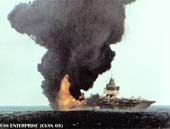
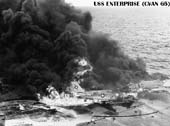
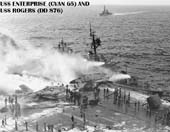
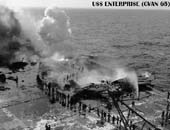
69.1/6真珠湾 出港後第4次戦闘哨戒に従事中/14ハワイ の南西75nmで爆撃訓練中、F-4J搭載のMk32、ズーニー・ロケット弾(LAU10)にスターター・ユニットの排気が当たって暴発炎上し大型爆弾9発が誘爆、28名が死亡、65(#367)or83or85(航空情報374)or343(航空情報別冊現代空母の全貌)名が負傷、15機が損傷(損害額5600万$)し真珠湾 に自力回航後6週間で修復3/31ヤンキー・ステーション進出4/14日本海 上空でEC121M電子戦機が北朝鮮機に撃墜されたことから空母タイコンデロガ、レインジャー、(CV12)ホーネット 、戦艦ニュー・ジャージー等23隻と第71任務部隊を編成し日本海 に展開7/2アラメダ 帰投/8艦長Forrest
Silas Petersen大佐.8ニューポート・ニューズ 造船所で2回目の炉心交換と整備を開始
70.10/7横須賀市議会が同艦の寄港反対を決議
71.1工事完了6/11第14攻撃空母航空団を搭載してアラメダ 出港12/3艦長Ernest
Eugene ("Gene") Tissot Jr大佐/4インド=パキスタン戦争の勃発によりインド洋に派遣/11ベンガル湾に進出し東パキスタンのアメリカ人を収容
72.1ヤンキー・ステーションに復帰2/12アラメダ 帰投
74.3/18最初のF-14Aトムキャット戦闘飛行隊が着艦4/9艦長Carol
Castleman Smith,Jr大佐9/17出港
75.4/29サイゴン陥落時にミッドウェー、コーラル・シー、ハンコック等と引揚げの防空援護に従事6/30原子力空母(CVN65)
76.7/30第7艦隊所属として初めてS-3Aヴァイキング対潜哨戒機を積んで戦闘航海に出港12/10艦長James
Willis Austin大佐
79.1/9ピュージェット・サウンド /ブレマートン 工廠でPDMSx2をMk29(NATOシー・スパロー短SAM発射可能)に換装、Mk15ヴァルカン・ファランクス20mmCIWSx3を搭載しSPS-32/33レーダー、パコダ・マスト、アングルド・デッキ・ホーンの撤去を中心とする近代化改装に着手(90970ft
331.6oax40.5[飛行甲板76.8]x11.9m 35knt 航空機90 C13型射出機x4 昇降機x4)
80.2/23艦長Robert Joseph "Barney"
Kelly大佐
82.2工事完了(工事費$27670万)3/4アラメダ 入港.9アラメダ 出港後真珠湾 寄港9/14横須賀を出港した空母(CVA41)ミッドウェー 等とアッツ島 近海で合流/25-6ペトロパヴロフスク 沖で艦艇15隻等と演習に従事中/29第213飛行隊のF14A戦闘機がミッドウェー に緊急着艦(/30離艦)後千島列島沿いに南下.10初旬、津軽海峡を通過して日本海に入りウラジオストック 前面で演習/8対馬海峡を通過してインド洋12/16アラビア海でソヴィエト対潜空母ミンスクに接近(ミンスクがYak36フォージャーを発進)後パース 寄港
83.2/7-27スービック湾 寄港3/15大韓民国との合同揚陸演習チーム・スピリット83に参加し浦項 付近への上陸演習を支援後日本海経由で/21-5佐世保 に原子力巡洋艦(CGN25)ベインブリッジ 、駆逐艦(DD986)ハリー・W・ヒル、ミサイル駆逐艦(DDG24)ウオッデルと15年ぶりに寄港し市民約1000名が見学4/3津軽海峡経由で太平洋に抜けミッドウェー、コーラル・シー等艦艇30航空機300による合同演習フリーテックス83に参加/18アラメダ 帰投6/17艦長Robert
Lee Leuschner Jr大佐
85.5/14-6/28第9次リムパック演習に原子力空母(CVN70)カール・ヴィンソン 等と参加8/14サン・フランシスコ で実施された対日戦勝40周年記念行事に参加しブッシュ 副大統領が乗艦10/18-.11北太平洋でカール・ヴィンソン 、ミッドウェー 等とともにFleet
Ex85演習に参加中11/2座礁事故により推進機1機を損傷し18mにわたって船体部に亀裂が発生し浸水後も演習に継続参加/27入渠
86.1/12アラメダ 出港後原子力ミサイル巡洋艦(CGN35)トラクストン 、(41)アーカンソー 等に護衛されて西太平洋方面に配備/27艦長Robert
Johnson Spane大佐.4末、スエズ運河 を通過しリビア 沖に展開
88.10/28艦長Harry Taylor Rittenour大佐
91現在、ニューポート・ニューズ 造船所で$20億の予算で近代化改装を兼ねた炉心交換工事を実施中8/7艦長Daniel
Clark Roper大佐
93.8/27艦長Richard Joseph Naughton大佐
94再就役し空母(CV67)ジョン・F・ケネディ と交代して大西洋艦隊に編入されノーフォーク に配備の予定で実施中
96.2/2艦長Michael Dennis Malone大佐
97.11/10艦長Evan Marthy "Marty"
Chanik大佐
2000.3/10艦長James Alexander "Sandy"
Winnefeld,Jr大佐
02.2/15艦長Eric Christian Neidlinger大佐
04.12/10艦長Lawrence Scott "Larry"
Rice大佐
06.5/2ノーフォーク 出港後中東に派遣
07.5/17艦長Ronald Horton大佐
09.5/12空母(CV63)キティ・ホーク の解役により現役最古参(帆走フリゲート、コンスティチューション を除く)
10.5/6艦長ホーナーズOwen Paul Honors Jr大佐
11.1/4ホーナーズ大佐が06-7同艦幹部時代に猥褻なヴィデオを製作し乗員に見せていたことが発覚し艦長を解任、艦長Dee
Leon Mewbourne大佐8/17艦長William Christopher Hamilton Jr大佐
12.12/1ノーフォーク で退役予定.
信号符字NIQM.
世界初の原子力空母(水上艦艇としてはロング・ビーチ に次いで2番目)で、竣工時、戦艦大和 の記録を更新する世界最大の軍艦で、現在も世界最長の軍艦.
1975アメリカ原子力空母(CVN68)ニミッツ 竣工まで世界最大の軍艦.
愛称ビッグE(Big E).
Up Down
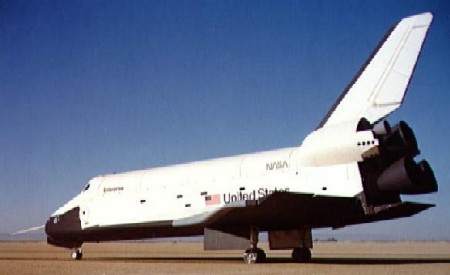
Enterprise parked on
runway at Edwards AFB, circa 1977. NASA photo .
Up Down
Since 1 Sep.
2001.
Last up-dated
11 Dec. 2013.
The Encyclopedia of World ,Modern Warships .
#8
Enterprise.
Ver.1.13a.
Copyright
(c)
hush ,2001-13. Allrights Reserved. Up
動画  エンタープライズ.
 とのリンクの記念として贈呈します.
 Down
Down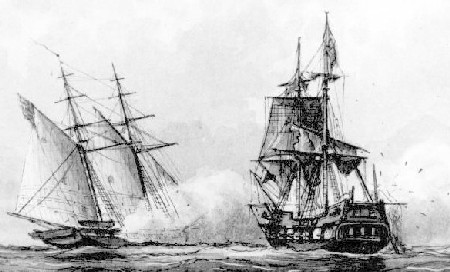
 RN Emerald class
light cruiser HMS Enterprise,
March 1938.
RN Emerald class
light cruiser HMS Enterprise,
March 1938.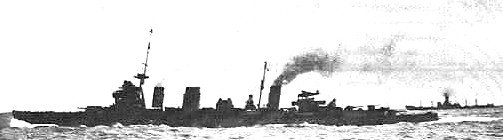
 Illustrated by Kiyochan.